Injection Combustion
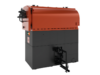
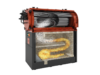
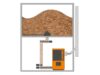
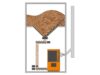
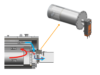
The very dry, powdery fuel is blown in to the fully fireclay-lined and high-quality insulated combustion chamber via one or more injection lines. The blow-in process, combined with a specially designed combustion chamber geometry, ensures optimal fuel combustion as well as the necessary turbulence and flow conditions.
The fuel is injected according to the injector principle. This means that no fuel enters the injection fan, thus preventing wear on the fan caused by the fuel.
Heat storage in the fireclay mass ensures the correspondingly high combustion chamber temperatures, which guarantee very low emission values. A horizontal 3-pass fire tube boiler or cooling-screen boiler is installed on top of the combustion chamber as a high-temperature hot water boiler. Depending on requirements, steam heat exchangers or thermal oil boilers can also be supplied.
Designed for the wood industry
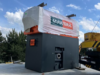
The VFE was developed specifically for industrial wood processing. Even fuels such as MDF or particleboard scraps pose no challenge to the combustion box.
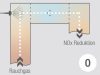
The low NOx combustion chamber is designed with primary-side measures, such as air staging, to reduce NOx emissions. The control of the primary air supply, in combination with flue gas recirculation, ensures sub-stoichiometric combustion in the reduction zone.
Secondary air is supplied after the combustion chamber’s reduction zone. The corresponding firebox geometry, combined with the combustion air supply, ensures high turbulence and mixing with the flue gas, thereby achieving optimal oxidation (CO burnout) of the combustion gases.
Selecting the Right Wood-Fired Combustion Box
In addition to energy demand, the type, particle size, and water and ash content of the fuel are the most important factors in selecting the right box. However, annual operating hours and the annual load curve are also important factors.